


Jawline Enhancement: Reshaping the Lower Face with Jawline Surgery
One of the most prominent concepts in modern facial aesthetics is a sharp and defined jawline. A strong and clear lower face line balances the overall facial expression, highlights the neck contour, and strengthens the profile. When the jawline is unclear, with soft transitions and loss of contour, the face can appear more tired, round, or aged. This can result not only from aging but also from genetic structure, recessed chin, increased fat tissue, or laxity in the submental (under-chin) area.
Jawline aesthetics is not merely a trendy procedure; accurately determining facial proportions and harmonizing the chin and neck line with anatomy is fundamental for overall facial balance. Modern facial surgery aims to create a defined yet natural jawline, enhancing the lower face while preserving the character of the face.
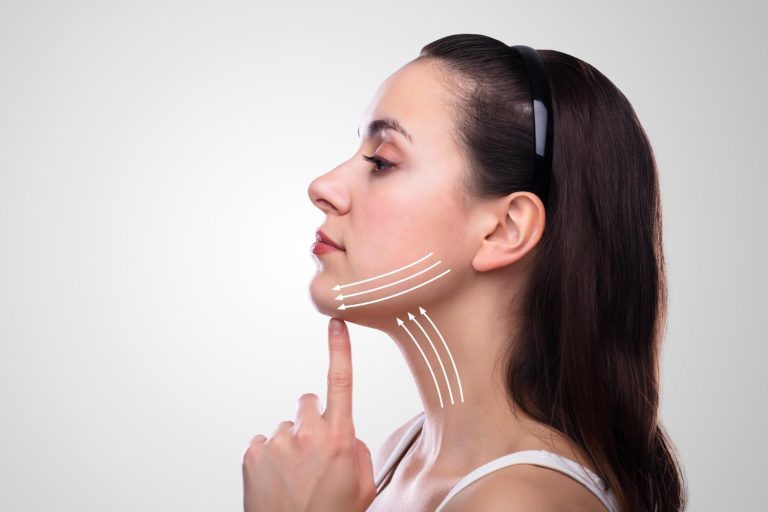
Key Components of Lower Face Aesthetics
To enhance the jawline and neck contour, correcting a single area is not sufficient; the lower face must be evaluated as a whole. The main structures targeted in jawline surgery include:
- Chin (may require genioplasty or implant)
- Jawline contour
- Neck area and platysma muscle
- Submental (under-chin) fat
- Deep and superficial connective tissues
For optimal jawline aesthetics, bone, muscle, and fat structures must be addressed together. This approach ensures a contour that is both natural and well-defined.
Techniques Used in Jawline Surgery
Different surgical combinations can be planned according to the patient’s needs to enhance the jawline. This approach is entirely different from “shaping with fillers,” as the goal here is permanent anatomical restructuring.
Techniques that can be applied:
- Genioplasty (moving the chin forward/backward/up/down)
- Chin implant (biocompatible anatomical prosthesis)
- Deep neck surgery & platysma tightening
- Submental liposuction (removal of under-chin fat)
- Fat transfer (to support smooth transitions and contour)
In many patients, liposuction alone may be sufficient, while in some cases, chin support is necessary. The appropriate method is determined based on the facial structure and the desired jawline.
Key to the right result: strong definition + natural transitions + facial balance.
The aim is not an artificial or overly sharp appearance but a structured, refined, and clean contour.
Who Is It Suitable For?
- Individuals with an undefined jawline
- Those with fat accumulation or laxity in the submental (under-chin) area
- People with a recessed chin and weak profile
- Those unhappy with a rounded, soft lower face appearance
- Patients seeking a permanent solution rather than temporary results with fillers
In men, masculine and sharper contours are planned; in women, soft yet defined lines are created. The character of each face is preserved.
Recovery Process
Recovery varies depending on the procedure, but generally:
- Mild swelling and tightness are normal during the first week
- Return to social activities within 7–10 days
- Softening of tissues and final shape within 2–3 months
Proper compression, lymphatic support, and controlled movement help speed up recovery. The results settle over time, becoming natural and well-defined.
Conclusion
Jawline surgery delivers strong yet natural results that redefine the aesthetics of the lower face. The primary goal is not merely to enlarge the chin but to harmonize the lower face and neck as a whole.
This approach provides a clearer facial expression, a stronger profile, and a youthful, firm neck line. The result is a clean, balanced, and refined jawline that preserves the individual’s natural structure.
The facial expression remains unchanged; the person simply appears stronger, more defined, and more refreshed.


